Clear stored electronics after the data decisions are settled
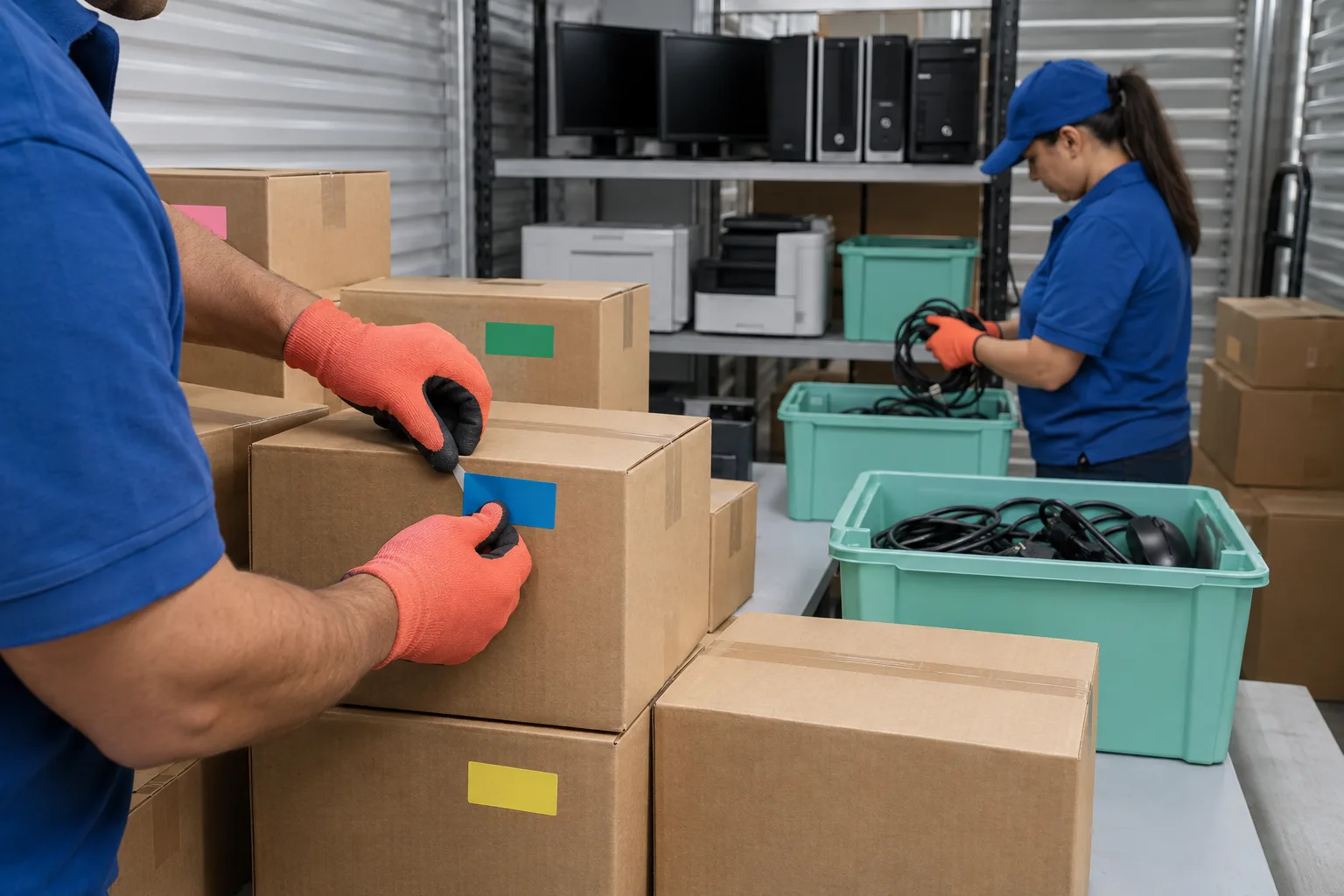
Electronics need decisions before they leave a storage unit. Remove personal data, identify batteries or damaged equipment, and group loose cables so the crew can clear the approved items without stopping for device-by-device questions.

What can be part of the job
The final scope is reviewed on site. Mention unusual, damaged, wet, or restricted items before the appointment.
- Computers and monitors
- Printers and office devices
- Televisions
- Small household electronics
- Cables and peripherals
Prepare the route, not a perfect pile
A useful appointment note covers the unit, the contents, and the way out. You do not need to drag approved items into the hallway.
- 1
Back up and erase personal data before pickup.
- 2
Disconnect devices and coil loose cables.
- 3
Separate loose batteries for review.
- 4
Tell us about cracked screens, swelling batteries, or damaged equipment.
What shapes the estimate
Photos and a short item list help with planning. The crew confirms the work and price before loading begins.
Build your estimate noteDevice count and size
Fragile or damaged components
Loose batteries and accessories
Sorting requirements
Facility access and cart distance
Use the matching prep guide
The guide gives you a practical checklist for this part of the cleanout.
Questions before removal day
Do I need to move items into the hallway?
No. Keep approved items inside the unit and preserve a clear path where practical. The crew handles lifting and loading after the scope is confirmed.
Can I keep some items in the unit?
Yes. Clearly separate or mark anything that must stay, and have one person available to answer close calls.
Will the unit be swept?
A broom-clean finish is part of the documented storage-unit cleanout process. Confirm the facility’s exact move-out requirement before the visit.
What should I report in advance?
Mention moisture, pests, chemicals, batteries, pressurized containers, very heavy pieces, damaged glass, and anything whose identity is uncertain.
Make the route easy before the truck arrives
Share the unit size, the largest items, and the access route. An on-site review confirms the scope and estimate before lifting begins.