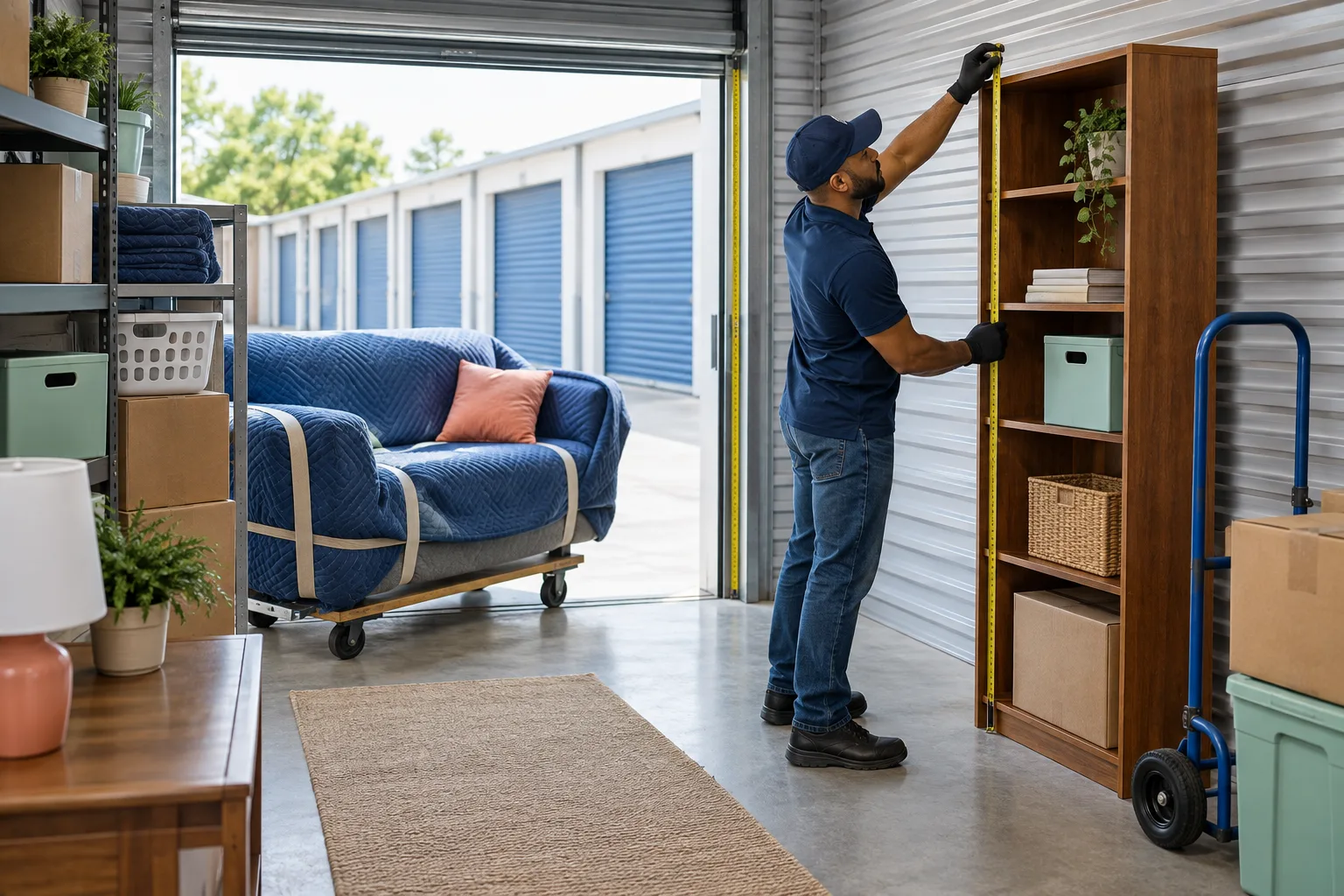
Measure the furniture at its widest points
Record width, height, and depth. For sofas and chairs, include arms, feet, and reclining hardware. For bookcases and tables, note removable shelves or legs without assuming they can be taken apart safely.
Photograph the front, side, and any hardware. A model name is useful when available, but dimensions control the route.
Measure every pinch point
The unit opening is only the first check. Measure hallway doors, elevator doors, elevator depth, corners, ramps, and the loading entrance. A piece that clears a doorway may still fail at a ninety-degree turn.
Tell the crew whether doors can stay open and whether facility staff must unlock a freight elevator.
Empty and stabilize the piece
Remove drawer contents and loose shelves. Tape should not touch finished wood directly; use an appropriate wrap or moving blanket. Point out glass panels, loose backs, damaged joints, and swollen particleboard.
Do not attempt risky disassembly to save time. Share photos and let the crew decide what tools and handling plan the job needs.
Send one clear measurement note
List each large piece with dimensions, floor, elevator status, and any disassembly already completed. Add two or three photos showing the route. That gives an estimator something concrete to review.
Ready for a scope review?
Send the unit size, largest items, and access notes. The crew confirms the estimate before loading.
Plan your estimate